Thursday, October 20, 2016

What is included in a AC check up?


AC systems account for more than 40% of our total energy bill in Phoenix area so it is essential that HVAC systems support a comfortable, healthy indoor environment and operate efficiently throughout their lifecycles. For Phoenix residents, an AC check up can be beneficial twice a year. Once during the Spring before the cooling season and once in the Fall, after the air conditioner has done all the heavy lifting for the summer before the heating season. The Spring tune up is important because to verify that the air conditioner will be ready and tuned up for the long summer stretch, where it is expected to run 6-8 hours in the summer.

Mechanical systems require routine monitoring, adjustments, periodic cleaning, and eventual replacement of components. Conducting regularly scheduled inspections, maintenance, and remediation of HVAC systems prolongs equipment efficiency, promotes healthy clean air, supports lower utility costs, guards against unexpected failures, and prolongs equipment life. Occupants and the environment will both benefit. ​

Every AC check up should include an air handler / furnace inspection

This means that your AC technician should be getting in the attic and you should see him with a ladder, tarp and tools. Too many AC companies do NOT go into the attic as part of their AC tune up and they should be. There are several important checks that need to be done in the attic and can’t be done from the outside condenser alone. A complete 31 point AC check up should tailored specifically for the Phoenix’s summers and dry winter and include…


1. Baseline measurements 

Thermostat set points, filter sizes, system type, system size, model and serial numbers, outside temperature, relative humidity are all standard measurements that help interpret our AC readings. Even in a hot dry climate like Phoenix, these readings can add valuable insight to help diagnosis HVAC problems waiting to happen.

2. Compressor amps ​ 

The compressor is the heart of the AC unit and is the most expensive part of the AC unit. It is well worth the investment to protect the compressor and ensure it runs smoothly by making sure the other AC components are also working properly. A high amp draw on the compressor can be a sign that something upstream or downstream from the compressor is out of whack and doesn’t necessarily mean the compressor needs to be replaced… although that is what most inexperienced technicians believe.

3. Compressor run capacitor, outdoor fan motor run capacitor and indoor motor run capacitor 

Capacitors hold and release energy that allow the compressor and fan motors to start. Common signs of bad capacitors are bulging, leaking fluid and burnt contacts at the capacitor and low or high electrical output. If you hear a humming sound at the compressor but it refuses to start, it’s a sign that a capacitor has gone bad. A weak run capacitor can significantly shorten the life of the HVAC system. A hard starting compressor, a compressor that is constantly short cycling or improperly sized ductwork can lead to an early capacitor failure.

4. Outdoor and indoor fan motor and blower motor amps Amperage is a measure of power being used by an electrical device, in this case an AC fan motor. 

When a motor is drawing more current than it was designed for, it will shorten its life and burn up the motor. Mechanical failures at the fan motor come from dry or worn bearings which over time which can start to show warning signs via a high amp draw on the fan motor. If the AC system is overcharged with refrigerant it may also cause the fan motor to go bad.

5. Fan blade and blower wheel balance A mismatched fan blade can adversely affect the performance of the unit, cause insufficient cooling and a high energy bill. 

A mismatched fan blade may have been installed on a hack job or if the AC fan blade or blower wheel was bent somehow it can throw off the balance of the fan or wheel. When a fan blade is imbalanced the outside condenser cannot get rid of enough heat to complete the refrigeration cycle and you may get an icing of the coils or you may notice your home not being able to cool as well as it used too. Same thing is true for the blower wheel balance


6. Start contactor 

An air conditioning contactor allows the unit to turn on and off like a switch. Common signs of bad contactors are burnt or corroded contact points and electrical outputs out of typical range which are typically caused from constant wear over time. Sometimes the contactor will “stick” close or not make good enough contact when pulled in because of pitting or debris.

7. Reversing valve and solenoid (heat pumps only) 

Reversing valves on heat pumps reverse the flow of refrigerant depending on the heating or cooling season.

A bad reversing value can often be confused with a bad compressor. A skilled technician will be able to diagnose which one is the problem. Reversing valves operate on pressure differences so depending on the refrigerant levels when the AC system is on, and what is does once it is shut off can tell us a lot about diagnosing any problems.

8. Low and high voltage electrical connections 

Poor high voltage connections at the bus bar, disconnect and into the AC units can also cause AC components to over-amp.

Over time initial weak electrical connections will shift with the expansion and contraction of the electrical heat and a simple tightening of the screws and keep current flowing at each components rated amps.

9. Super heat and sup cool refrigerant pressures 

Refrigerant pressures are often misread and taken improperly by inexperienced technicians which can lead to an improper diagnosis. AC units that do not have the proper refrigerant charge can be caused from refrigerant leaks, a bad reversing value, or from a previous tech adding too much refrigerant. Leak checks can be done by pressurizing the refrigerant lines with nitrogen, a Freon gas sniffer or soap bubbles if the tech cannot visually locate the leak.

10. Condensation pan 

Checking the secondary condensation drip pan is important even if little or no moisture is being pulled from the house because we can tell us there are hidden issues that happen to occur before or after our inspection. We look for standing water, rust in the pan or potential clogging issues. Signs of previous standing water in the secondary drip pan (the one you can see) mean that the primary drip pan is clogged or the level of the air handler / furnace is sloped wrong… and that is a bad thing. When the primary drip pan gets clogged it can mean the evaporator coils are getting rusted and the debris is caught in the PVC drain pipes. The solution can be as simple as flushing out the lines or the indoor coil may be on its last leg and ready for replacement.

11. Static pressure 

Static pressure measures the amount of restrictions in the ductwork and can tell us if the unit is drawing too much amps because of a bad duct design. Common causes of a high static pressure would be closing registers, bad duct designs, kinks or restrictions in the ductwork or stamped faced registers. Signs that your unit has a high static pressure are constant capacitor failures, high energy bills and hot rooms in the summer.

12. Ductwork 

If you have ductwork that is only sized for a 4 ton AC system, but you have a 5 ton unit in your attic, do you think you’re home will receive the full 5 tons of air? If the air distribution network can only handler 4 tons of air, or 1600 CFMs, even if you put a 6 ton system on all that’s going to be delivered is 4 tons of air. Checking for the proper duct size, restrictions and leaks should be a part of every AC contractors tune up checklist. Mismatched or leaky ductwork will lower the SEER on any unit so to ensure you are getting all that you paid for, make sure your ductwork is matched up correctly and sealed to deliver all cold air to your home you are paying for.

13. Insulation ​ 

Insulation is checked on AC inspections? Of course! A lack of insulation will allow the conditioned air that blows into the house to be lost like sand running through your fingers if your home is not properly insulated. If everything else in your tune up checks out OK, then we need to look past the unit to the insulation, ductwork, airflow and house leaks. Home performance is often neglected in AC check ups but should be integrated into every AC companies operations.

Monday, October 17, 2016

Where HVAC contractors fall short

You can find great heating and air conditioning contractors of all sizes. What makes a great HVAC contractor? Experience, caring about the quality of the work and good customer service are the magic ingredients that are easier said than done. Even if a AC contractor has all these ingredients that make up a great technician or contractor they probably do not have the experience or know how to solve home performance issues like the comfort problems or high energy bills. Many AC contractors default to adding a return in a hot room or blow and go (just blowing more insulation in the attic on top of whatever is existing) and it can leave homeowners short... not solving their comfort or efficiency issues. 
Lack of Home Performance Know-How 

Call it the Achilles heel of the HVAC industry but AC contractors have all but ignored home performance even though it has huge impacts on the effectiveness of new and existing AC units. Air conditioning contractors are getting pushed out of their comfort zone with home performance. Now not all AC contractors ignore the elephant in the room but many small and large AC companies do. How do we know this? When you perform over 2000 home energy audits you get to see all sorts of situations and get to fix all kinds of messes left over by HVAC contractors. Someone homeowners have trusted AC contractors who are highly recommended and put on a well deserved pedestal but talk to them about home performance, the HVAC poster child can turn into the jealous step sister Drazella and can end up making themselves look like fools. We have seen countless homes that have had "energy audits" done by HVAC contractors and who were supposed to have done home performance work including duct sealing, air barrier sealing, air sealing and insulation realignment. I was shocked to discover duct board put in the wrong location to create a thermal boundary in the attic and the AC contractor charged the customer for this! Their home performance work was done all wrong. 

Wrong Airflow Recommendations

Installing a new high efficiency air conditioner is only as good as the old ductwork that is in the attic. In older homes, air conditioning systems were designed to match the old HVAC system and have the opportunity to be upgrades with the new unit. Too many air conditioning contractors just consider the unit, and ignore the ductwork. If the ductwork is only sized for a 4 ton system, but you are putting a 5 ton AC system on, your home will home get 4 tons of air! In Phoenix, this happens way too often and it leads to comfort, air quality and high energy bill complaints. 

We've seen that air conditioning contractors typically love to add a return in a room when homeowners have a hot room in the summer time. We rarely see this work out as a good solution though, more often we are the ones getting calls from homeowners still having issues that are not fixed and AC contractors know just enough to make the problem worse but not enough to actually fix it. Proper airflow recommendations can fix a hot room, but it takes a whole home approach and the experience to know which recommendations to install.

For HVAC contractors 

This section is for air conditioning and heating contractors to help understand and practice home performance more proficiently. Just like it would be silly for homeowner to buy a set of gauges and interpret temperature/pressure charts without knowing what they are doing, without an understand of how a home works as a system, specific upgrades like insulation or ductwork sealing can be meaningless or worse, even harmful to a homeowner. To take it a step further, even if the owner of the company becomes BPI certified to do energy audits, an install crew that is used to doing new AC installs day in and day out, may be clueless as to how to create a proper thermal barrier in the attic, or how to run a room pressure test to measure the effects of air sealing a home. Without careful planning and oversight of a crew, their energy efficiency installation work can be a waste of a homeowners money. 

What commonly happens is that the AC contractor performs an energy audit with an agenda but their recommendations come out narrow and cookie cutter... they are the same for each house. Then the installation crew that does the work doesn't know how to do it properly or has too little oversight to correct mistakes as they occur and the work is done wrong. In the home performance, energy efficiency industry we have a saying that "99% right is 100% wrong" and it's critical that energy efficiency work gets done right the first time. Why? Well when you blow a bunch of insulation over bad work, it becomes hard to find the mistakes and we may never get a second chance to fix the contractors problems. 

Unless you are doing the work yourself, or can check it was done right before and after the insulation goes in, it's best not to get into home performance because you are likely hurting more customers than helping them. While there is no denying that home performance and heating and air conditioning are complimentary and should be done as pairs, home performance is a different animal entirely and requires staff dedicated to its success. That means if you decide to offer home performance upgrades, you'll need at least one dedicated staff to perform home energy audits, lead a crew to ensure the job is done correctly and set up systems and checks to ensure that it gets done right the first time. What systems and checks should you use? That answer is found from actually doing the field work and learning where the pitfalls are and where guys most often make mistakes or take shortcuts, find hiring a manager who has that experience. 

There is nothing wrong with offering to add another return to a hot room, or dabble in airflow recommendations but just realize that no one solution is likely going to solve your customers true issues like a whole home performance solution can.

Sunday, October 16, 2016

Best Practices All Air Conditioning Companies Should Follow

What best practices does your company follow during my installation?

This single question posed to AC contractors can reveal a lot on how the company performs their installations.  You can trust and like your sales rep but if they don’t know or you get a blank stare as a initial response, you’re better off finding a contractor who is a little less polished but knows their installation crews.  In Phoenix your air conditioner replacement is the most important day of its life and you want to carefully screen any AC contractor that gives you replacement costs.
Experienced air conditioning contractors are good because they know where the hiccups occur during an air conditioner install and how to avoid them and they know what the most common call backs are and how to avoid them. Most of the time doing the right thing requires a little extra effort on their part during the AC install. For most AC contractors this is not the standard way of doing their installs and just like learning how to swing a golf club the correct way verses the easy way, it takes them out of their comfort zone and most would rather just skip doing the extra effort verses spending a little more time, effort and materials to do it right. 
You definitely want to hear an air conditioning contractor tell you they do the following:

1. Charge the system with the correct amount of refrigerant after installation. This is not factory settings as every system comes with refrigerant already charged it. Many contractors just leave the factory charge and do not bother adding any more or measuring to find out how much more is needed and this is a big problem. If the distance from your outside condenser to the inside air handler is more than 15 feet, your AC contractor should be adding more refrigerant as the manufacturers only add enough refrigerant for 15 feet of refrigerant line.


2. Size the unit according to what your home needs, not based on the square footage of the house alone. This requires a Manual J calculation on the house so you should see your contractor measuring your windows and actually going in your attic to measure the insulation. 


3. For package roof units, you want a side by side elbow, not a down draft and not a over-under aka twist elbow. This is a major no no that most AC contractors are guilty of not following. Down draft and over-under elbows are cheaper and easier to install and require less labor and materials but are NOT best for your energy bills, comfort and the life of your system. If your AC contractor is really stuck in their ways or really lazy, they will make up excuses on why down draft and over-under elbows are OK to install, they may even believe what they are saying is true but hold firm in your affirmation that you want a side by side elbow. 


4. They install supply and return plenums. A plenum is a transition between the ductwork and the unit. If your furnace or air handler is in the attic like most are in Phoenix, the plenum is likely a sheet metal box that has flex duct connecting into it and the other side is attached to the furnace. If your furnace or air handler is in the garage or closet, the return plenum is the framed box that it sits on and the supply plenum is the sheet metal on top. Plenums are important for proper airflow, allowing the unit to breath and mix air in the box before it hits the evaporator coils. They are not always included in the cost of an AC but should be. It is extra work to install them but every home should have them.

5. There are several other must-haves when requesting specifics during air conditioner bids but the list above are the basics to start you on the right foot. I would make sure all these things were done on my own home and you should too.  For a free quote on an air conditioner replacement cost and a list of our best practices call Green ID at (602) 926-1650 to speak with our comfort consultants.

What should I ask my HVAC contractor when getting AC bids?

What should you look for in an HVAC contractor in Phoenix? Getting your heating and cooling system replaced is a very important day and the right preparation on your part can add years of additional life to your unit with minimal repairs and great Air conditioner savings along the way. Get it wrong, and your air conditioner and heater will be plagued with emergency AC repairs, loud AC fan noises, bad capacitors and fan motors and an early death.


Unfortunately, according to the DOE more than half of new systems in U.S. homes do not perform to their rated efficiency as a result of improper installation. In fact, improper installation can reduce performance by as much as 30%. This not only affects your utility bills, but can lead to a variety of comfort problems, including insufficient cooling, dust from leaking ductwork, and poor air distribution. At Green ID, we tell our customers it doesn’t matter what manufacturer you go with for your HVAC system, the most important thing is how it’s installed that first day. Here is a reference guide to help choose the right heating and cooling contractor.

​Ask the following questions to each contractor:

1. What best practices does your company follow during my installation?

This single question posed to AC contractors can reveal a lot on how the company performs their installations. You can trust and like your sales rep but if they don’t know or you get a blank stare as a initial response, you’re better off finding a contractor who is a little less polished but knows their installation crews.

Experienced air conditioning contractors are good because they know where the hiccups occur during an air conditioner install and how to avoid them and they know what the most common call backs are and how to avoid them. Most of the time doing the right thing requires a little extra effort on their part during the AC install. For most AC contractors this is not the standard way of doing their installs and just like learning how to swing a golf club the correct way verses the easy way, it takes them out of their comfort zone and most would rather just skip doing the extra effort verses spending a little more time, effort and materials to do it right.

You definitely want to hear an air conditioning contractor tell you they do the following: 

a. Charge the system with the correct amount of refrigerant after installation.

This is not factory settings as every system comes with refrigerant already charged it. Many contractors just leave the factory charge and do not bother adding any more or measuring to find out how much more is needed and this is a big problem. If the distance from your outside condenser to the inside air handler is more than 15 feet, your AC contractor should be adding more refrigerant as the manufacturers only add enough refrigerant for 15 feet of refrigerant line.

b. Size the unit according to what your home needs, not based on the square footage of the house alone.

This requires a Manual J calculation on the house so you should see your contractor measuring your windows and actually going in your attic to measure the insulation.

c. For package roof units, you want a side by side elbow, not a down draft and not a over-under aka twist elbow.

This is a major no no that most AC contractors are guilty of not following. Down draft and over-under elbows are cheaper and easier to install and require less labor and materials but are NOT best for your energy bills, comfort and the life of your system. If your AC contractor is really stuck in their ways or really lazy, they will make up excuses on why down draft and over-under elbows are OK to install, they may even believe what they are saying is true but hold firm in your affirmation that you want a side by side elbow. Here's our list of reasons why a side by side elbow is better on package HVAC units in Phoenix.

d. Supply and return plenums

A plenum is a transition between the ductwork and the unit. If your furnace or air handler is in the attic like most are in Phoenix, the plenum is likely a sheet metal box that has flex duct connecting into it and the other side is attached to the furnace. If your furnace or air handler is in the garage or closet, the return plenum is the framed box that it sits on and the supply plenum is the sheet metal on top. Plenums are important for proper airflow, allowing the unit to breath and mix air in the box before it hits the evaporator coils. They are not always included in the cost of an AC but should be. It is extra work to install them but every home should have them. e. There are several other must-haves when requesting specifics during air conditioner bids but the list above are the basics to start you on the right foot. I would make sure all these things were done on my own home and you should too.

2. How will you determine the maximum system size that can be installed with my existing ductwork?

 I love this question because it immediately separates the true players from the fakes. It is a variant of the question of system sizing for the house and asking if the contractor performs a Manual J load calculation to verify the size of the unit. Here you are making sure your ductwork is going to be properly sized for the unit, which is just as important as matching the size of the unit correct to the house specifications (windows, insulation, duct leakage, sq ft, air leakage, etc). Having a 5 ton HVAC system with ductwork that can only handle 4 tons of air is a big problem and we see it all the time. It causes the HVAC system to work harder than it needs to, shortening the life of it’s components, comfort issues with hot and cold rooms, weak airflow, exaggerates ductwork leakage, and causes noisy systems.

The correct answer would be to measure the static pressure of the unit to see how well the air is moving in the and out of the ductwork before a new unit is installed. This will require your contractor to go in the attic (if your HVAC unit is located there) to measure and if you never see them go in the attic, you know that your static pressure was never measured. It is possible in many cases to increase the size of the ductwork to handle more airflow and that will be up to your HVAC company to determine. ​

To lower your energy bills, make your home more comfortable with less dust, you cannot rely on just changing the air conditioner and heater alone. Your contractor needs to consider the ductwork as well… and if they are really on their game they are going to talk about your insulation as well. Duct leaks and poor airflow to rooms are the major cause of comfort issues… it’s not having a dinosaur HVAC system. A new variable speed HVAC system is not a one-stop-shop to fixing those problems although some HVAC contractors may make it seem that way, resist the temptation to look at just the box.

3. Do you recommend and how much is it to install new refrigerant lines rather than reusing existing lines? ​

The answer you are looking for is “yes”, when switching from the old outlawed refrigerant R22 to the more environmentally friendly R410, we always recommend installing new refrigerant lines. The old R22 refrigerant is not compatible with the new R410 refrigerant, they don’t mix well together and you can ruin your compressor if the old R22 is not cleaned out of the refrigerant lines. Does it increase the cost? Yes, it will add to the cost but you are taking better care of your new unit now to have a worry-free system in the future. Changing out your existing refrigerant lines is labor intensive and copper lines are not cheap, but I like this question because it gives you an idea where in the ballpark this AC company falls in terms of best practice knowledge and actually caring for the quality of work or if they are just going for the sale.

4. Will you help me install my programmable thermostat?

It’s easy for HVAC installers to get used to just doing the installation routine without much customer interaction. However for a complicated AC system that costs thousands of dollars, it’s helpful to have a little explanation of your new unit and getting acquainted with all its nuisances soon after it’s up and running. This starts with the thermostat, the only interaction you’ll probably ever have with the entire system. Programmable thermostats can save money on your energy bills by setting the temperature up while you are away in the summer, similar to turning the lights off when you are not in the room. The smart thermostats of today can sense when you are away automatically raise the temperature up in an energy saving mode that you don’t have to think about. However, some thermostats are pretty complicated to navigate, change the settings, set up the wi fi and learn the functionalities. It can be like programming your VCR or the old digital watches, something we can put our attention to maybe once to try to program, then we just give up the rest of the year and just live with the factory settings the same as when we took it out of the box. Ask your AC company to agree to help you install and set up your programmable thermostat for easy additional comfort and savings.

5. How do you fix a hot room?

Whether you have a room that’s different temperatures than the rest of the house or not, this questions can tell you if your heating and cooling company is more on a cookie cutter path or takes a more customized approach. More and more heating and air conditioning contractors are defaulting to installing a new return in a hot room to help air circulate out of the room. It is true that you can never have enough returns in your home but it all depends on the best practices of the company. In our experience adding a return an help make a room more comfortable, but it’s subtle and won’t leave you feeling entirely satisfied. We have lots of feedback from our customers who had only returns installed, only additional supplies, and both additional supplies and returns and the results are not promising. ​

You can read our post on why rooms get so hot above a garage here to get an idea what truly causes comfort issues and the correct way to address them, but it is NOT by adding a return to a room (you’re welcome HVAC contractors).

6. When installing my ductwork connections, will you seal at all the duct seems first? ​

Proper heating and air conditioning installation has so much more to do with the ductwork than it HVAC contractors give it credit for. Again this question hints at a whole home approach to air conditioning installation. AC contractors that just consider the unit change out are leaving their customers short and are asking for a life time of AC problems. Early capacitor failures, bad fan motors and pitted contactors are signs that something else is going on in the attic outside of the actually unit that are causing early failure. Other signs the airflow and ductwork needs to be properly inspected are rooms that are different temperatures than the rest of the house, excessive dust and high energy bills. An air conditioning company may claim that this new high efficiency SEER 16 system is going to fix comfort and dust concerns but putting a high end AC unit on a badly designed duct system is like driving a Prius with a hole in the gas tank. It’s best to consider a whole home approach when replacing your air conditioner and start with a certified energy audit.

7. Will you test to confirm that duct leakage does not exceed recommended levels?

Testing for airflow and duct leaking is the only way to be sure if the work was done right. That test can be done with a blower door or duct blaster and is pictured here

Aerosealing is an effective way at sealing small holes in the ductwork but it will not seal anything greater than 1/8th of n inch. In many older homes, the ducts have a hole greater than an 1/8th of an inch so a manual seal is better suited and is what we at Green ID prefer because we apply our sealant on thicker and it our product has a longer lifespan than Aeroseal. Read more about Aersoealing and the bad wrap is has been getting here. ​ 

8. Will you confirm proper levels of refrigerant and airflow across the coil?

This last question is important because a typical HVAC contractor will say that the units come factory charged and that is enough the typical house. What they don’t tell you is that every manufacturer is different and many AC manufacturers have been chronically light on their factory refrigerant charge. This means that, yes, after every install the refrigerant levels should be measured and the proper amount needs to be weighed in to ensure the correct amount is put in the system from Day 1. A rule of thumb is if the refrigerant lines are longer than 15 feet, that is 15 feet from your outside condenser to the air handler in the attic, more refrigerant should be added.

Measuring airflow across the coil is important because you want to be sure you are getting the correct amount of airflow into the home. Air conditioning companies need to measure that all the air into the return is existing through the supplies and that it is the correct amount of airflow for the size of the unit. Most HVAC contractors will just install the box and forget about anything outside of it to the owners determent. When you purchase a new heating and cooling system, you expect high performance. Not all Phoenix HVAC contractors are the same. Ask the AC contractors bidding for your business if they follow ACCA Best Practice Guidelines or ENERGY STAR® Quality Installation Guidelines (www.energystar.gov/qispec) to ensure that you are not buying just a piece of equipment but a properly installed heating and cooling system that provides comfort and efficiency.

Saturday, December 5, 2015

How Arizona Homes Can Benefit From Having An Energy Audit Performed - Ranch Style Home

The Arizona home profile chosen today is the all American, ranch style home. Whether APS or SRP customers, Arizona homeowners can find these long, low roofline homes in almost every city from northern Phoenix, south Scottsdale, Sun City, Mesa, Chandler and Glendale. Ranch style homes are usually 30 years or older when energy codes didn't exist and attic insulation and energy efficiency was an unheard of word. Here are the most common things we have found after doing more than 1,000 energy audits on this type of Arizona home.


Arizona ranch style homes have low rooflines with little attic ventilation. This is one type of Arizona home where adding a rigid vent at the peak of the roof slope is probably a good idea. This passive ventilation helps circulate the air out of the attic, without actively sucking your conditioned air from inside the house like a solar attic fan or electric powered attic fan does. I like rigid vents because it may be difficult to add the bird-hole vents along the perimeter of the house and it is not possible to add another gable vent. Because the attics of Arizona ranch homes get so hot in the summer, it is essential to add at least R-38 insulation to the attic to slow the transfer of attic heat down into the house. R-19 or even R-11 may have been code when the house was originally built so adding more insulation should be a no-brainer. Another way to help cool the attic temperatures is installing a radiant barrier along the roof slope. Radiant barriers reflect the heat back out of the attic and help keep the ductwork cooler in the summer. You can read more about radiant barriers on our previous blog.

Attic connections into the house are also a common energy deficiency found in Arizona ranch homes. When you walk to the bedrooms does your ceiling lower because of the metal ductwork running above the hallway? If you put a thermal camera on those interior walls during the hot Arizona summer you'll find that the walls a bright orange and red color compared to the other walls of the house. Why?? It's because those walls are directly connected to the attic from missing top plates. You could actually stick a 8 foot ruler down the entire length of the hallway wall from the attic. Those areas need to separated and sealed from the attic.

The ductwork in a Arizona ranch home is going to be very leaky and may not be sized properly. This can cause bad airflow, hot rooms, constant AC problems and high energy bills. When these homes were built the metal ductwork was held only with tape so even a slight bump in the ductwork can separate the round rigid lines. APS and SRP estimate as much as 30% of your conditioned air is lost through leaks in the ductwork. Add to that a poor design and it's no wonder why some rooms are hotter and colder than others. Sealing the ductwork up can have huge benefits to the comfort of the home and the energy bills.


Do you have a swamp cooler? Do you love using it?

Some Arizona ranch style homes still have an evap cooler attached to the roof, and many Arizona homeowners love using their evap cooler 2 months out of the year. What these homeowner's don't know is that their evap cooler is costing them more to keep and use during the hot summer months when the AC is on full blast and what they save during those two months of more temperate weather. During those two months yes, you are saving more money by not using the AC. However, during the 2 months of the dead heat, when 100 degrees looks like a break from the heat, you are loosing more money from leaky ductwork. Check out our video on swamp coolers here.

What about spray foam in the block walls?

I was speaking with the program manager for the Arizona energy audit program about what he thought of spray foaming the block walls of a home and what he said surprised me. He told me that his own home is a ranch style house with block walls and after he insulated the attic, sealed and re-did the ductwork, and air sealed the attic from the house the only things he has done to his walls was put a trellis with cat's claw vine along his sun struck block wall and his energy bills are not more than $220 on a 2,100 sq ft home.

I verified this with our energy models and while spray foaming your sun struck walls does save money on your energy bills, our models show you get 90% of the savings you would from spray foam wall insulation by simply shading the wall. I have become a proponent of spending $400 on a landscaping trellis than $3,000 on spray foaming one wall.

Arizona ranch homes have a number of distinguishing exterior features, including a long, low roofline with have large windows in the living room. However they also have some pretty distinguishing energy efficiency features that directly causes high energy bills, comfort complaints and poor air quality. Having an APS or SRP approved energy auditor to inspect the home's performance can be the greatest gift you can give yourself that keeps on giving for years to come.

Thursday, November 19, 2015

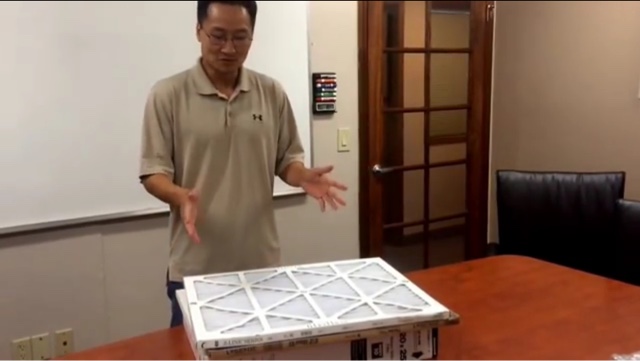
Why Changing Your Filter Is Important and What Type of Filter is the Best

When it comes to keeping your HVAC system maintained, nothing is more important or easier than making sure your filters get changed out every month or two.  Dirty, neglected filters have real affects on your AC system that end up costing you more in repairs and early replacement down the road than if they were changed regularly. 

When the air filter gets dirty it becomes restrictive to airflow passing through it, so your unit needs to work harder to "breath in." This puts stress on the small components like the capacitor and can cause them to run on a higher amperage, costing you more to run. Restrictive airflow can also cause your outside condenser coils to freeze over, creating a ice block over the coils and cause your HVAC unit to blow warm air in the summer. Dirty filters also allow more dust and crap past the filter and to build up on the indoor evaporator coil.  This lowers the efficiency of the heating and cooling system, costing you more money and not making you as comfortable as a properly operating unit would.

There are several types of air filters for your heat pump or furnace. Unfortunately, the kind most homeowners use is the most damaging to the AC system. However, as long as they are changed regularly, about every 2-3 months, you are still ahead of the curve. These filters are promoted as allergen reducing filters and have a 1" pleat or rib. The little known downside to them is that with only 1" of surface area, the heat pump or furnace will really have to work hard to suck air past the filter.  Have you ever tried to breath through only one straw? That's what is happening to your AC system every time it's turning on with the 1" pleated filters. 

We recommend using the cheap throw away filters because of the low airflow restriction. Your heat pump or furnace has to work a lot less to breath in and get the full capacity of air past the cooling coils. The only downside is that the cheap throw away filters do not catch as many airborne particles as the 1" pleated filter. If you are looking for the ideal filter that does both, capture airborne particles and doesn't put the heat pump or furnace under a lot of stress, look for the 4" HEPA filter. 

So what filters are the best? We love the 4" HEPA filters because it filters the dust and allergens better than either of the other filters plus it allows maximum airflow to pass through it, not stressing the AC system. The HEPA filters are becoming more commonly found at your local Home Depot or Lowes and they only need to be changed every 3 months. The only downside is that they are more expensive than the 1" pleated filters, but not that much more. 

To watch a video overview of the different types of filters watch the YouTube video link below:

Saturday, October 24, 2015

When Does Your Ductwork Need To Be Replaced?

Ductwork comes in all shapes and sizes, galvanized metal ductwork allows the most air capacity to be delivered to your rooms per foot because it has the least friction resistance. 

Flex ductwork is easy to install but it's a treacherous road should your contractor have taken it. There are many pitfalls were simply unbeknown to many HVAC contractors on the implications of their work. Here is a short list of pitfalls Green ID's energy auditors typically find in an attic.

1. Improper size
"I'm supposed to put a 18" duct but I only have a 14", I'll just make it fit!" I feel that's a common thought HVAC contractors have when doing these horrible installs. Not only does undersized ductwork chock off your airflow, robbing your home of its full air capacity, but it makes your unit work harder and drives up your energy bills.

2. Too many wye splits.
Every wye split adds 10 feet in length to your duct runs, so after the 4th wye split don't  be surprised that the airflow is weak when your heating and cooling system needs to add an extra 40 feet of run to its load.

3. Leaks.
Arizona home performance standards require that every flex connection be sealed with mastic for a 50 year plus lifespan. If your ductwork is not properly sealed, every time the HVAC unit kicks on you are throwing money out the window by heating and cooling the attic. In homes older than 20 years duct tape may have been used as a "sealer." Duct tape may be a universal fixer of all things except when it comes to your ductwork. It doesn't take long for duct tape in the attic to become loose and its adhesive deteriorated. 

4. Evap cooler (swamp cooler).
If your home ever had a swamp cooler, the swamp cooler ductwork may still be connected to the main ductwork of the house.